

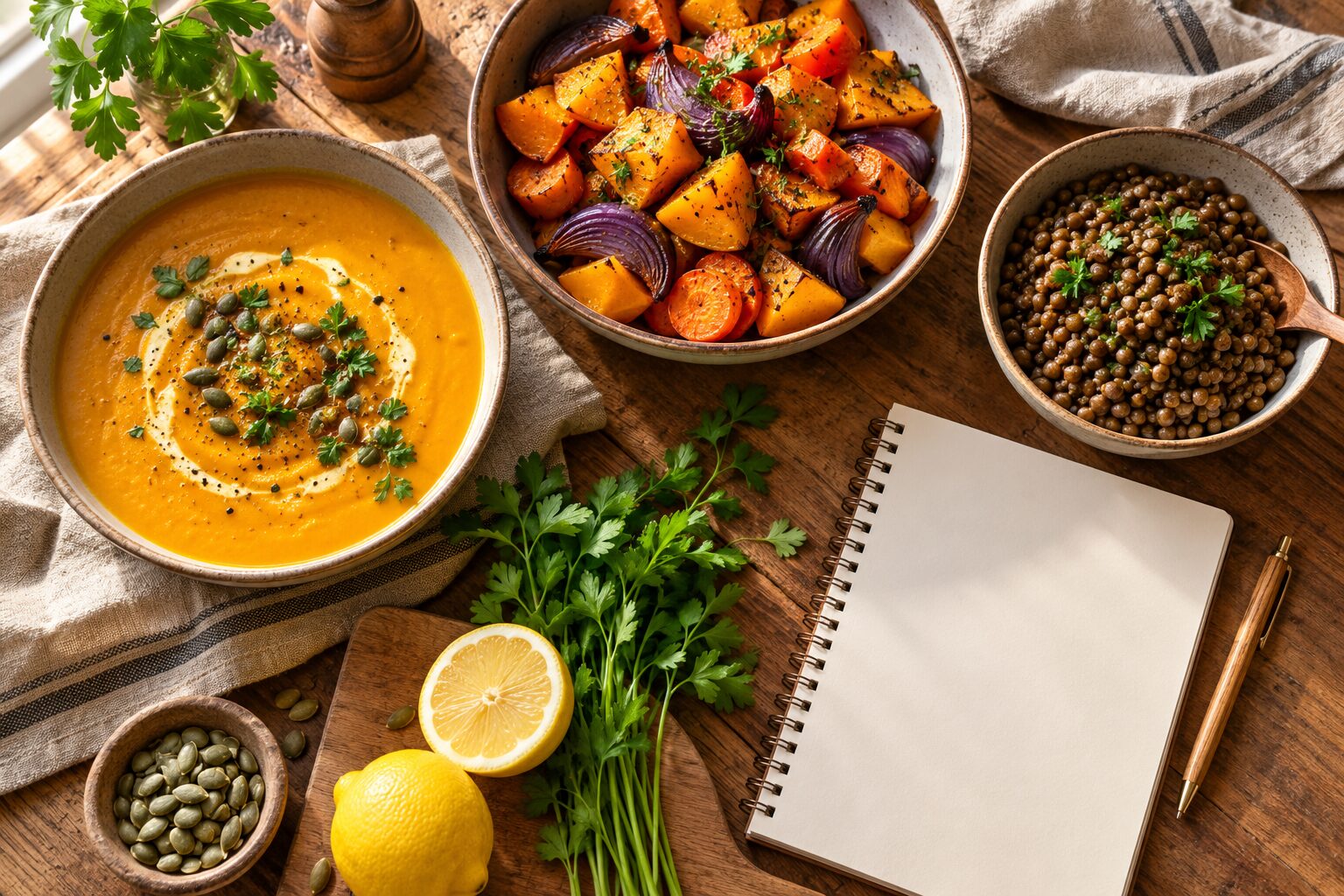
A useful meal plan should make the busy parts of your week easier. It does not need seven complicated dinners or a refrigerator full of identical containers. Start with a few flexible dishes, repeat ingredients with different seasonings, and leave room for leftovers. The goal is to decide less often while still enjoying what you eat.
Start with your calendar, then choose your recipes
Mark the evenings when you have time to cook and the evenings when you need dinner quickly. Put an oven dish on a quieter day and a reheated soup on a busy one. Decide how many people each meal needs to feed before writing the shopping list. A recipe that serves four is one dinner for a family of four, but two dinners for a couple.
For a manageable first week, choose three main cooking sessions, one quick fresh meal and one flexible night. Add a weekend dessert only if you actually want to bake. Planning every available hour can turn a helpful routine into another obligation.
Use ingredients more than once
Pick a small group of vegetables and pantry staples that fit several meals. Carrots can roast beside chicken and later appear in a lentil bowl. Spinach works in orzo or a chickpea skillet. Lemon brightens soup, seasons fish and forms the base of a tahini dressing. These overlaps help you finish what you buy without repeating the same plate.
- Choose two or three vegetables that keep well, such as carrots, cauliflower and squash.
- Add one leafy vegetable for the first part of the week, or keep frozen spinach as a backup.
- Stock a few cans of beans, chickpeas and lentils for meals that do not require advance soaking.
- Use one fresh herb in several dishes and vary the flavor with cumin, smoked paprika, mustard or lemon.
A flexible seven-day example
- Monday: Make pumpkin and white bean soup. If you want it again this week, cook enough extra portions now and set them aside promptly.
- Tuesday: Roast lemon chicken with potatoes and carrots. Prepare only the quantity you need, or plan extra vegetables for the next day.
- Wednesday: Reheat a reserved portion of soup and serve with toast. If there are no leftovers, make mushroom and spinach orzo.
- Thursday: Cook a smoky chickpea and sweet potato skillet. Keep yogurt and herbs separate so each person can finish their own bowl.
- Friday: Bake salmon with green beans and potatoes for a freshly cooked meal.
- Saturday: Use a planned freezer meal or another simple dinner, then bake an apple cinnamon oat crumble if you feel like a weekend project.
- Sunday: Make cauliflower and lentil bowls, then check what remains before planning the next shopping trip.
Prep components, not an entire week of finished meals
A short preparation session can be enough. Wash the vegetables you will use soon, mix a dressing and check that the pantry ingredients are ready. Keep chopped vegetables covered and refrigerated. Do not cut every ingredient automatically: potatoes, apples and delicate leaves often benefit from being prepared closer to cooking.
If the oven is already on, an extra tray of vegetables can make tomorrow’s meal easier. Give each tray enough space for browning and rotate them if your oven cooks unevenly. Store sauces separately so roasted ingredients do not become soggy.
Write the shopping list from quantities
Combine repeated ingredients before shopping. If Tuesday needs 400 g carrots and Sunday needs another 400 g, write 800 g carrots once. Distinguish canned weight from drained weight: a 400 g can of beans often gives roughly 240 g after draining, but check the label. Look in the refrigerator and cupboard before adding duplicate items.
Group the final list into vegetables and fruit, chilled ingredients, pantry staples and freezer items. Keep one backup dinner in mind, such as pasta with canned tomatoes and beans, so a late meeting does not unravel the whole plan.
Make leftovers an intentional part of the plan
Set aside tomorrow’s portion before serving if you know you need it. Divide leftovers into shallow containers and refrigerate promptly, within two hours (or one hour above 32°C / 90°F); do not leave a large pot on the counter to cool overnight. Keep the refrigerator at 4°C / 40°F or below. Use refrigerated leftovers within three to four days, or freeze portions intended for later. Reheat leftovers to 74°C / 165°F, and bring soups and sauces to a rolling boil.
Label freezer portions with the dish and date. Thaw in the refrigerator rather than on the counter. When you plan a leftover night, count actual portions instead of assuming that some food will remain.
Keep the plan easy to change
At the end of the week, ask which meal felt easy, what went uneaten and where you needed a faster option. Keep the useful meals and change the awkward ones. A short rotation of reliable dinners is often more useful than a completely new menu every week.
Your next plan can be as simple as one soup, one tray bake, one skillet meal, one fresh fish dinner and one flexible evening. The variety comes from the vegetables, sauces and textures—not from starting from scratch every night.
Food storage reference: USDA FSIS: Leftovers and Food Safety.